
- Basilica del Sto. Niño

“Sto. Niño” which is the Holy Child Jesus statue is in this church. Sto. Niño is one of most famous landmarks in Cebu, located along Osmeña Boulevard. People says that it was founded in the 16th Century and it is considered as the oldest “Roman Catholic Church” established in the country. Have a walk inside the church halls to see the Ancient Paintings, Gorgeous Archways, Stained glass windows and overall, a piece of architecture that is cool and inspiring. Outside the church you can buy candles from the candle vendors and they will ask your family name, then they dance to the high heavens while praying for your family.
2.Magellan’s Cross
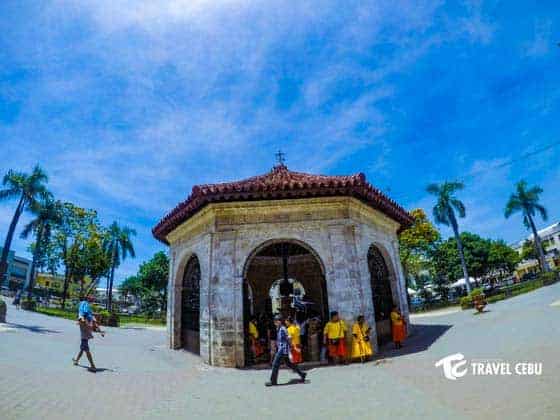
Just a few steps away from Sto. Niño Church, it is said that the Magellan’s Cross is a symbol of Roman Catholicism in the Philippines. Housed in a chapel, the Cross is said to have been planted through the order of Ferdinand Magellan to signify one important event the propagation of the Roman Catholic faith in the islands. It also symbolizes the colonization of the Philippines on the behalf of King Philip II of Spain.
3. Fort San Pedro
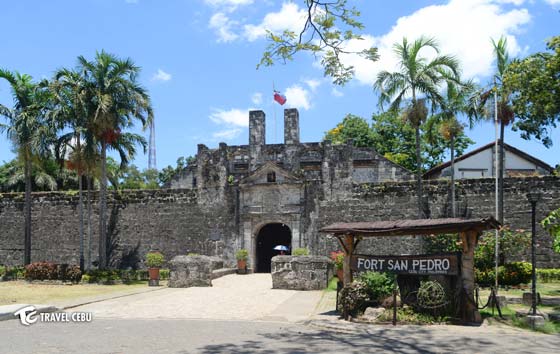
Fort San Pedro or (Fuerza de San Pedro) is a military defense structure which is the oldest fort in the Philippines. It is located in the area now called Plaza Indepedencia, in the Pier Area of Cebu City. Fort San Pedro is a triangular in shape consisting of three bastions: “La Concepcion, San Ignacio de Loyola and San Miguel”. Spanish leader, General Miguel Lopez de Legazpi commanded the building of this fort. De Legazpi thought to use it against Muslim warriors. However, as time passed by, other colonizers had used it for other reasons. When Americans occupied Cebu, their soldiers used this as their residence. Also, Americans educated Cebuanos in this fort.
4. Cebu Heritage Monument

Here where you can see the different Statues of Heroes. it showcase the unforgetable significant events in the history of Cebu. It’s location on the oldest street in the Philippines, the Colon Street in Cebu City. the one National Artist who structured the monument is Eduardo Castrillo. The monument was made of steel and bronze. Eduardo Castrillo begans the sculpting in July 1997 and he completed in December 2000. The features of the monument are the “Battle agianst the foreign colonizer, The Spanish occupation, The Christian conversions, The Prominent Christian Figures and also a certain Philippine President”. With centuries full of Battles, Revolutions, Invasions, a city with full of stories to tell I suggest to visit the
Cebu Heritage Monument for you to know the details.
 Travel